wordēē started at the table.
When my son Zachari was 3, I came across the book Teach Your Child to Read in 100 Easy Lessons and fell down a rabbit hole of parent reviews swearing by it. I got a copy, read all the instructions, and then did it my own way. Flexible, streamlined, whenever we could fit it in. My husband got in on it too. It worked.
But the stories sometimes bothered me. Although often funny and entertaining, it was a bit dated. And I kept thinking the system itself is brilliant. The diacritic marks that show a child exactly how to decode every word deserved modern stories.
So I tried to build a generator. Thirty to fifty attempts across Replit and Custom GPTs. Font packages that wouldn't render. Models that couldn't hold consistency. I built a word list by hand, page by page, at soccer practice with my iPad open and parents definitely wondering what I was doing. It still wasn't ready. I put it down.
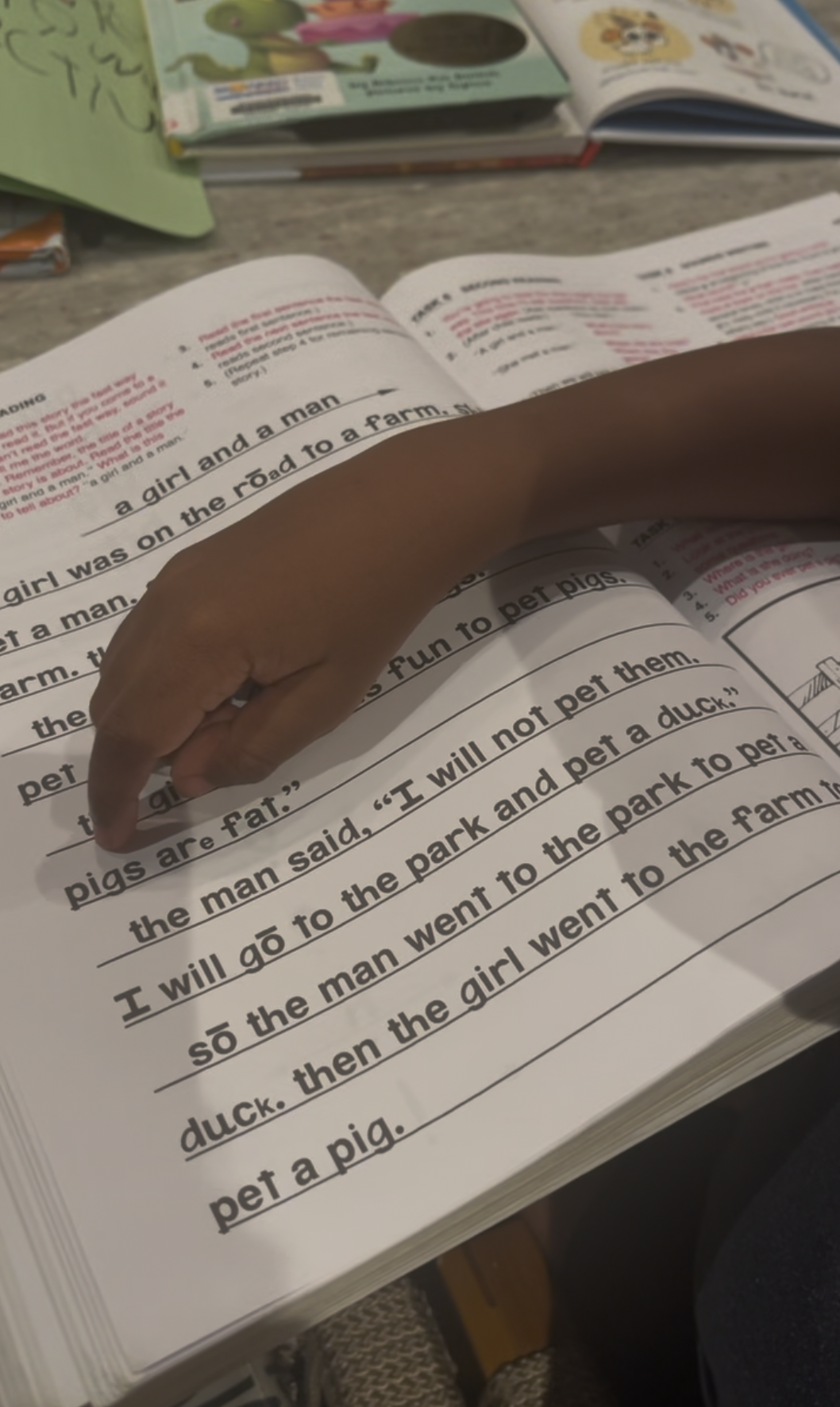
I picked it back up. Zachari had finished the program and was reading graphic novels. The models had changed. I photographed every page of the book, fed the images and rules to Claude, and got a 658-word vocabulary with maybe 15 corrections needed. I took it to Lovable. It worked.
wordēē is the result.
It's not a replacement for the program. DISTAR introduces phonics in a specific sequence and the book does that work. wordēē is supplemental. Extra practice. The same way a kid in the backseat reads the advertisement on the side of a passing bus without being asked to. They're still practicing. Use it however works for you.
Parents can personalize each story with their child's name and a description of what their child looks like, so the printable coloring page that comes with every story actually resembles their reader. And it's free.